Virgo Transport 8 Ferry Capsizes in Java Sea, Leaving 66 Dead and 69 Missing
The Virgo Transport 8 overturned while sailing from Surabaya to Banjarmasin in rough weather on September 13. By September 28, rescuers had recovered 66 bodies, while 69 people remained unaccounted for as the search continued inside and around the wreck.
- 🇬🇧United Kingdom
- 🇮🇩Indonesia
- 🇸🇬Singapore
- 🇺🇸United States
4 countries cited
What happened
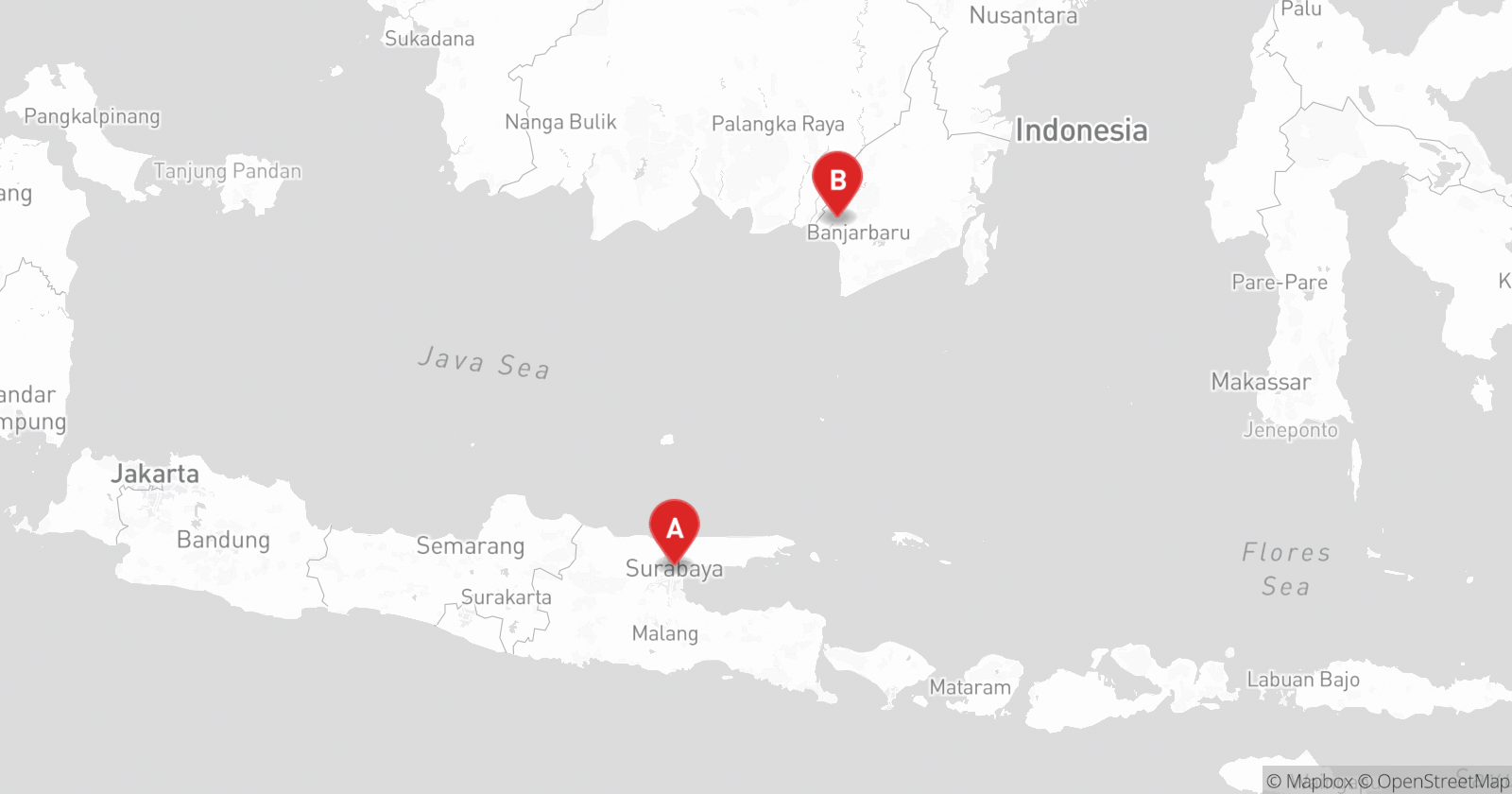
The Virgo Transport 8 ferry overturned in the Java Sea on September 13 while traveling from Surabaya, in East Java, to Banjarmasin, in South Kalimantan. Accounts from The Jakarta Post, CNA, the Associated Press and The Guardian agree that difficult sea conditions played a central role in the disaster. Early reports described strong waves and a vessel that became unstable quickly, leaving passengers and crew trying to move toward safer, higher areas of the ship.
Authorities said the ferry’s passenger manifest listed 243 people: 213 passengers and 30 crew members. By September 28, officials and rescuers had recorded 108 survivors, recovered 66 bodies and continued searching for 69 people who were still missing. Those figures account for everyone listed on the manifest, although the investigation and recovery operation remained ongoing.
The response has involved Indonesian military, police and rescue personnel, supported by ships, aircraft and underwater equipment. Teams have searched both the wreck and nearby shorelines, recovering victims from more than one location. The operation has continued well beyond the initial rescue phase because the submerged ferry may still contain victims and because conditions at the site have made access difficult.
Divers and other responders have faced unstable wreckage, sharp or obstructing debris, poor visibility, leaking fuel and potentially dangerous concentrations of gas. These hazards have slowed work inside the vessel and limited how long teams can safely operate underwater. The recovery effort therefore remains both a search for the missing and a hazardous salvage operation, rather than a straightforward examination of an accessible wreck.
How coverage differs
The Jakarta Post’s September 28 report is the most developed account of the recovery stage. Its emphasis is on the toll reaching 66 and on the practical dangers facing divers inside the ferry. Rather than treating the capsizing primarily as a breaking-news emergency, it presents the disaster as a prolonged operation in which each new recovery is accompanied by difficult decisions about responder safety, access and the condition of the wreck.
CNA, reporting two days earlier, gives greater weight to the authorities’ decision to extend the search after the recorded death toll reached 64. Its presentation is comparatively administrative: the key focus is the official division between survivors, recovered bodies and missing people. CNA also stresses that victims were found both in the vessel and along nearby coastlines, widening the picture beyond the wreck itself and showing how the search area developed after the initial sinking.
The Associated Press approaches the event from the first hours after the capsizing. Its account foregrounds the scale and speed of the state response, listing the range of agencies and equipment sent to the scene. It also gives prominence to survivors’ descriptions of the ferry’s rapid movement in rough seas and the scramble to reach higher sections. That emphasis makes the event legible as an unfolding emergency, before the later reports could establish a settled casualty count.
The Guardian similarly treats the first day as a story of uncertainty. Its early figures were necessarily provisional, and its account concentrates on high waves, the difficulty of reaching the vessel and the unresolved number of people aboard. It also places the accident in Indonesia’s broader maritime context, noting the country’s reliance on ferries and the recurring safety concerns associated with sea transport. In contrast, the later Indonesian and Singaporean reports are less focused on that wider structural backdrop and more concerned with official totals and the mechanics of recovery. Together, the coverage shifts from immediate rescue and uncertainty to accounting, hazards and the long aftermath.
Sources referenced
Original reporting synthesized in this article. Civitano summarizes coverage differences — it does not reproduce outlet wording.
- At least six dead and 130 missing after Indonesian ferry capsizes, officials say
- 🇬🇧United Kingdom
The Guardian’s early report centers on the uncertainty immediately after the ferry overturned, with rescuers battling waves of up to 2.5 metres while trying to reach the vessel. It also places the disaster in the wider context of Indonesia’s dependence on ferries and recurring maritime safety concerns.
Published September 13, 2026
- Ferry death toll hits 66 as search enters 16th day
- 🇮🇩Indonesia
The Jakarta Post’s latest report focuses on the recovery operation’s rising toll and the 69 people still missing. It emphasizes the hazards confronting divers inside the unstable wreck, including leaking fuel, sharp debris and limited visibility, while noting that 108 people survived.
Published September 28, 2026
- Death toll from Indonesia ferry sinking jumps to 64
- 🇸🇬Singapore
CNA reports on the authorities’ decision to extend the search after the death toll reached 64 on September 26. Its account highlights the official breakdown of survivors, recovered bodies and people still missing, as well as the recovery of victims from both the wreck and nearby shorelines.
Published September 26, 2026
- Indonesia intensifies search for 129 people from capsized ferry
- 🇺🇸United States
AP’s initial coverage describes the large-scale response immediately after the capsizing, with military, police and rescue personnel deploying ships, aircraft and underwater equipment. It also includes survivor accounts of the ferry listing rapidly in rough seas and passengers struggling to reach higher parts of the vessel.
Published September 14, 2026