Uruguay and HIF Global renegotiate location of proposed Paysandú hydrogen complex
Uruguay and HIF Global are revising the location and design of a proposed hydrogen and synthetic-fuels complex in Paysandú after objections from communities and officials across the Uruguay River in Argentina. The new site could reduce cross-border concerns, but environmental groups say key information and legal questions remain unresolved.
- 🇦🇷Argentina
- 🇺🇾Uruguay
2 countries cited
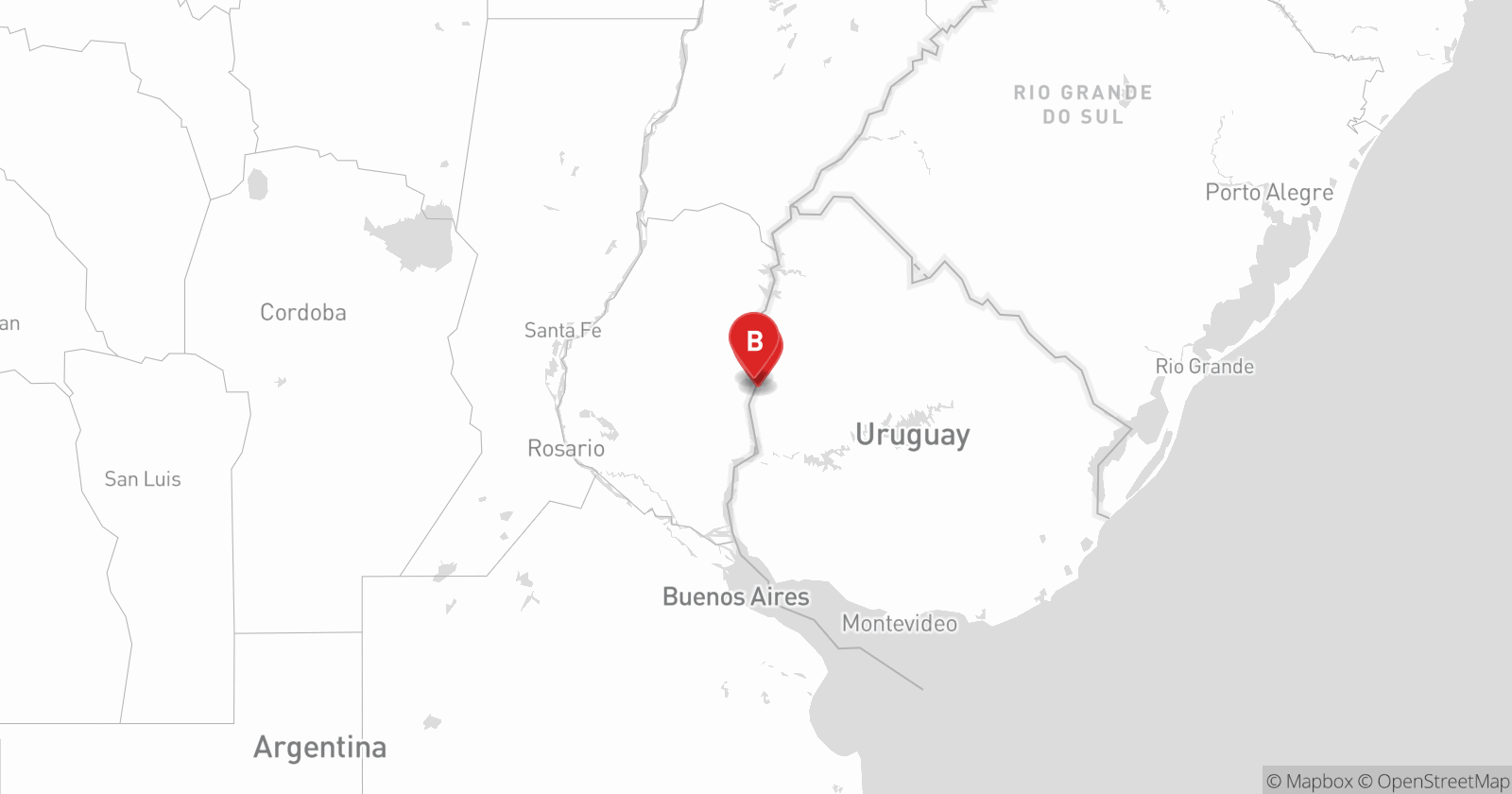
Uruguay and HIF Global are renegotiating the location and terms of a proposed hydrogen and synthetic-fuels complex in Paysandú after opposition from communities in Argentina led the company and government to reconsider the project’s original riverside site.
Uruguayan President Yamandú Orsi said talks with HIF had advanced and that the two sides could reach a further understanding within roughly two weeks. He indicated that the proposal had changed substantially while maintaining its central purpose: producing energy and related industrial products. The president also acknowledged that the location had been revised in response to concerns raised in Argentina, which he described as at least partly justified.
The proposed replacement site is understood to be on land connected to Uruguay’s state fuel company, ANCAP, farther from the river and closer to existing industrial facilities. The precise location and the final technical design have not yet been made public. Uruguay’s foreign minister, Mario Lubetkin, has formally told Argentine authorities that the plant would not be built at the initial site if the negotiations with HIF produce an agreement.
HIF’s representative for environmental and community affairs told Paysandú’s departmental council that the company was close to an agreement with Uruguay. The discussions have included additional environmental studies, engineering modifications and changes to the design of the industrial complex. The agreement, however, has not been signed, and the environmental review process is continuing.
The original proposal drew opposition in Colón and other communities in Argentina’s Entre Ríos province, directly across the Uruguay River. Residents and environmental organizations raised concerns about possible effects on public health, the river environment, tourism and the landscape. They also challenged the lack of information about how the project could affect the cross-border region.
The Paysandú government has presented the development as a major economic opportunity. It estimates that the investment could exceed $5 billion, with hundreds of permanent jobs and between about 1,300 and 3,200 positions during construction. Local officials have said the alternative location is being assessed both for logistical reasons and to reduce the area potentially affected across the river. They have also argued that the change should not delay the project’s timetable or weaken its compliance with environmental requirements.
Paysandú’s mayor said meetings involving Uruguayan and Argentine officials, as well as representatives from Entre Ríos, were intended to address the concerns of river communities rather than halt the development. The municipality has emphasized that Argentina did not formally request that the project be suspended. The decision to study a new site therefore reflects a combination of cross-border political pressure, local objections and operational considerations.
Argentine environmental groups have welcomed the abandonment of the original location but remain doubtful that the dispute has been resolved. In Colón, activists argue that moving the plant only a few kilometers may leave many of the same environmental, health, tourism and visual effects in place. They say residents still lack official details about the replacement site, its technology and its potential consequences for Colón and the wider Tierra de Palmares area.
The groups also maintain that civil and criminal proceedings associated with the project remain active in Argentina. Separately, a dispute concerning opposition signatures has continued in Paysandú. These issues mean that the relocation announcement does not by itself remove the legal or political obstacles facing the development.
HIF’s project is part of Uruguay’s effort to build an industry around renewable electricity, hydrogen and synthetic fuels. Its scale has made it important to Paysandú’s plans for investment and employment, but its location on a shared river has given the proposal consequences beyond Uruguay’s borders. The next stages will depend on the company and government reaching a formal agreement, completing the revised environmental assessments and providing enough information for communities on both sides of the river to evaluate the new plan.
Sources referenced
Original reporting synthesized in this article. Civitano summarizes coverage differences — it does not reproduce outlet wording.
- HIF Global, cerca de un acuerdo por la planta de Paysandú
- 🇦🇷Argentina
HIF Global’s environmental and community affairs representative told Paysandú’s departmental council that the company was very close to an agreement with Uruguay. The meeting covered continuing environmental studies, engineering changes and the industrial complex’s revised design, as well as expected employment during construction and operations. The article says the project was shifted toward a suburban area near ANCAP facilities after concerns from Argentina about the original riverside location. It also reports that the agreement has not yet been signed and that environmental reviews remain under way.
Published October 19, 2026
- ¿Termina acá o se relocaliza el problema? Ambientalistas creen que es demasiado temprano para festejar
- 🇦🇷Argentina
Environmental activists in Colón welcomed the abandonment of the original proposed site but said the conflict was not over. They argued that moving the facility only a few kilometers might leave its environmental, health, tourism and landscape effects largely unchanged. The group said residents still lacked official information about the replacement location and its consequences for Colón and the surrounding Tierra de Palmares region. It also claimed that civil and criminal proceedings connected to the project remained active in Argentina, while a separate dispute over local opposition signatures continued in Paysandú.
Published September 3, 2026
- Orsi aseguró que hay avances con HIF Global y en los próximos 15 días tendríamos algún acercamiento más
- 🇺🇾Uruguay
Uruguayan President Yamandú Orsi said talks with HIF Global had made progress and that the sides could reach another point of contact within about 15 days. He said the project had undergone significant changes while retaining its focus on energy production and related industrial products. Orsi also acknowledged that the plant’s location had been changed in response to an Argentine request that he considered partly justified. The report places the negotiations in Paysandú and notes that the local government had been pressing for movement on the investment.
Published October 17, 2026
- El Canciller Lubetkin confirmó oficialmente la relocalización del proyecto de HIF Global
- 🇺🇾Uruguay
Uruguay’s foreign minister formally informed Argentina that the proposed HIF plant would not be built at its original location if negotiations with the company succeed. The move was presented as a response to protests, legal actions and other objections from residents of Colón in Entre Ríos. The proposed alternative was described as one of ANCAP’s properties in Paysandú, farther from the initial site and potentially more advantageous operationally. The report cautions that legal and environmental challenges in Argentina may continue even after the relocation announcement.
Published September 3, 2026
- Olivera se reunió con cancilleres y aseguró que Argentina no solicita retrasar avance de instalación de HIF
- 🇺🇾Uruguay
Paysandú’s mayor said discussions with officials from Uruguay, Argentina and Entre Ríos were intended to address concerns raised by river communities without delaying the project. The municipality described HIF as a potential investment exceeding $5 billion, with hundreds of permanent jobs and between roughly 1,300 and 3,200 construction positions. It said an alternative location was being studied for logistical reasons and to reduce the area affected across the river, rather than because Argentina had formally demanded that the project be stopped. The local government emphasized that any relocation should preserve the project’s timetable and maintain compliance with environmental rules.
Published May 13, 2026