Pakistani Airstrikes in Afghanistan’s Kunar and Helmand Provinces Leave Competing Casualty Claims
Pakistani aircraft struck locations in Afghanistan’s Kunar and Helmand provinces amid worsening cross-border tensions. Afghan officials and UNAMA reported civilian casualties, while Pakistan said the operation hit militant sites and killed fighters.
- 🇦🇫Afghanistan
- 🇩🇪Germany
- 🇵🇰Pakistan
- 🇺🇸United States
4 countries cited
What happened
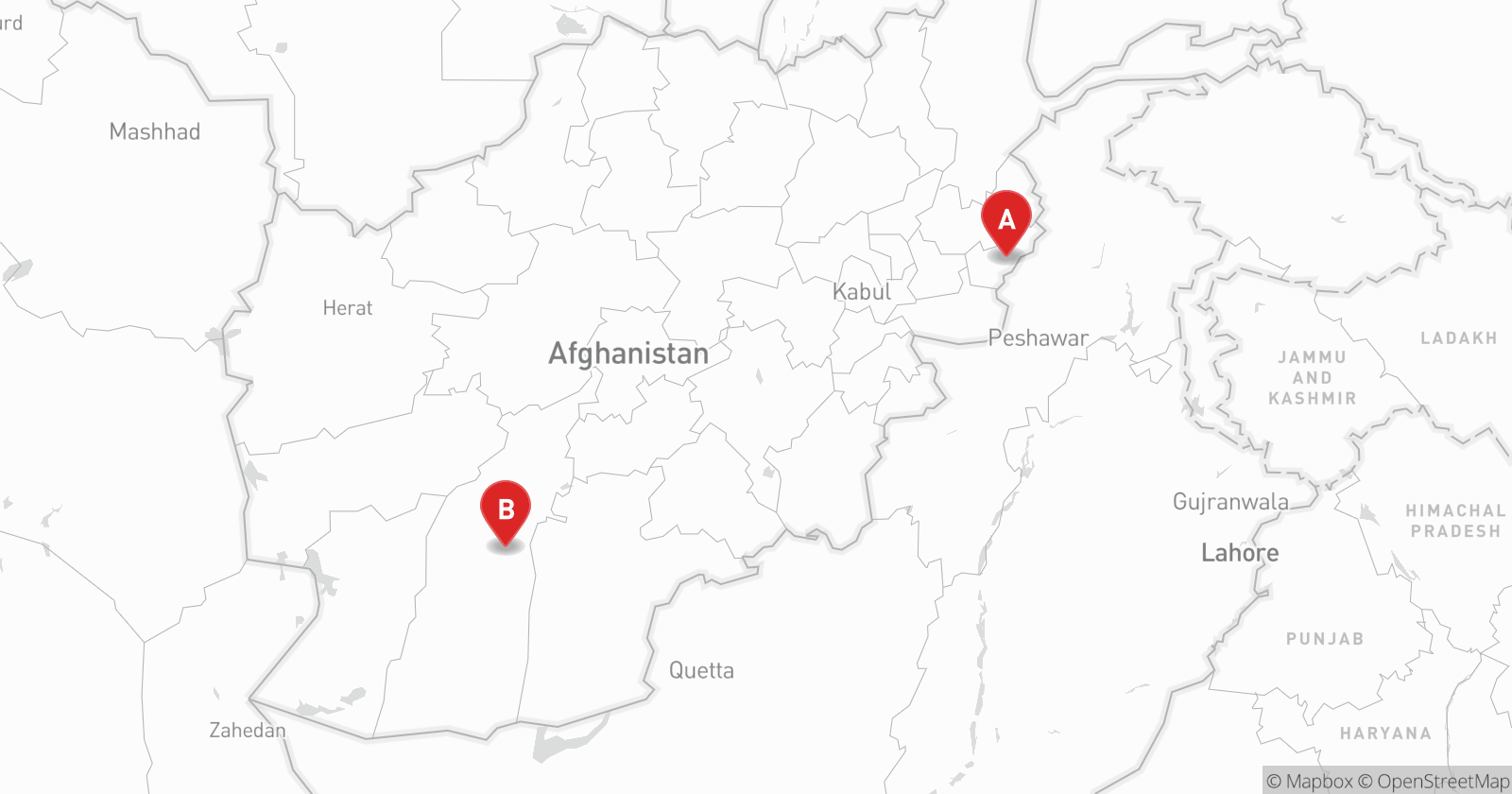
Pakistan carried out airstrikes at locations in Afghanistan’s Kunar and Helmand provinces on October 1, 2026, according to reporting by the Associated Press, Dawn, Pajhwok Afghan News and Deutsche Welle. The attacks took place against a backdrop of repeated clashes along the two countries’ frontier and longstanding accusations that armed groups use territory on the other side of the border. The strikes therefore represented another escalation in an already tense relationship between Islamabad and Kabul.
The broad factual point reported across the coverage is that Pakistani aircraft conducted the operation and that the two governments gave sharply different accounts of what was hit and who died. Afghan authorities said residential areas were struck and that civilians were among the casualties. UNAMA also reported civilian deaths and injuries. The exact figures varied: the AP account cited Afghan and United Nations reporting of at least 10 civilians killed and nine injured, while Pajhwok reported eight deaths and seven injuries based on Afghan officials and local sources.
Pakistan described the targets as militant hideouts rather than homes or other civilian sites. Its information ministry said the strikes were based on intelligence and aimed at armed groups that Islamabad associates with the Pakistani Taliban and Baloch insurgents. Pakistani officials said 22 fighters were killed and maintained that measures had been taken to avoid civilian casualties. The competing casualty claims were not independently verified in the reporting reviewed.
The immediate dispute thus concerns both the identity of the victims and the nature of the targets. Kabul’s account portrays a cross-border attack that harmed noncombatants, while Islamabad’s presents a limited counter-militancy operation. The strikes followed mutual allegations over armed activity near the border, but the available reports do not establish an independently verified account resolving the two narratives.
How each side reports it
Coverage aligned with Afghanistan generally begins with the human cost and the alleged location of the damage. Pajhwok leads with Afghan casualty figures and describes homes or residential areas as affected, relying on the Interior Ministry and local accounts. Its terminology treats those killed as civilians and the operation as an attack on Afghan territory. This presentation places responsibility directly on Pakistan and gives prominence to reports of people killed, wounded or still missing rather than to Islamabad’s description of the intended targets.
Deutsche Welle similarly foregrounds Kabul’s allegation that civilian homes were struck, including claims that women and children were among those killed. It sets Pakistan’s assertion of 22 militant deaths alongside the Afghan account but presents the disagreement as part of a broader pattern of Pakistani strikes, Afghan denials that it shelters militants and international concern about civilian protection. In this framing, the central question is the alleged harm to noncombatants and the danger of further escalation.
Pakistani coverage uses a different vocabulary and order of emphasis. Dawn’s account centers on the information ministry’s description of “calibrated” and intelligence-led action against terrorist hideouts. The word “terrorist,” rather than “militant” or “fighter,” links the strikes to Pakistan’s domestic security campaign and to its claim that armed groups operating from Afghanistan threaten Pakistan. The article emphasizes the reported death toll among fighters, the alleged connection to the Pakistani Taliban and Baloch insurgents, and official assurances that civilian harm was avoided.
The sources also differ in whom they treat as the principal authority. Afghan-oriented reports rely mainly on Kabul ministries, provincial or local accounts and UNAMA’s findings about civilian casualties. Pakistani reporting gives priority to the information ministry and the military-linked rationale for the operation. The AP account places those claims side by side and notes that neither casualty narrative could be independently confirmed. Across the coverage, what is highlighted or omitted reflects the competing political stakes: Afghan reports stress sovereignty and civilian losses, while Pakistani reports stress intelligence, militant infrastructure and the justification for cross-border force.
Sources referenced
Original reporting synthesized in this article. Civitano summarizes coverage differences — it does not reproduce outlet wording.
- 8 civilians martyred, 7 injured in Pakistani airstrikes on Kunar, Helmand
- 🇦🇫Afghanistan
Pajhwok reports the strikes primarily through Afghanistan’s Interior Ministry and local accounts, saying homes in Kunar and Helmand were hit and that civilians were killed, injured, or remained missing. The article characterizes the attacks as damage to residential areas and stresses the Afghan authorities’ allegation that Pakistan targeted noncombatants.
Published October 1, 2026
- Pakistan launches deadly airstrikes on Afghanistan
- 🇩🇪Germany
DW contrasts Kabul’s account of civilian homes being struck and nine women and children being killed with Islamabad’s claim that 22 militants were eliminated. Its framing places the episode in a continuing conflict that has produced repeated Pakistani strikes, Afghan denials of harboring militants, and international concern about civilian casualties.
Published October 1, 2026
- ‘Calibrated’ air strikes target terrorist hideouts at two locations in Afghanistan: info ministry
- 🇵🇰Pakistan
Dawn foregrounds Pakistan’s official justification, describing the strikes as intelligence-led attacks on militant camps linked by Islamabad to the Pakistani Taliban and Baloch insurgent groups. Its account emphasizes Pakistan’s assertion that 22 militants were killed and that precautions were taken to prevent civilian harm, while placing the operation within a broader campaign against cross-border terrorism.
Published October 1, 2026
- Pakistani airstrikes in Afghanistan kill 10 civilians, Kabul and UN say
- 🇺🇸United States
AP presents the episode as a contested cross-border escalation, reporting that Afghanistan and the United Nations attributed at least 10 civilian deaths and nine injuries to the strikes. It also includes Pakistan’s claim that the operation destroyed militant positions and killed 22 fighters, while noting that the competing casualty accounts were not independently verified.