Ethiopia and Eritrea Sever Diplomatic Relations as Tigray Fighting Intensifies
Ethiopia expelled 10 Eritrean diplomats and closed its embassy in Asmara, prompting Eritrea to cut diplomatic ties. The rupture came as renewed fighting in Tigray raised fears of a broader regional conflict.
- 🇫🇷France
- 🇮🇹Italy
- 🇶🇦Qatar
- 🇺🇸United States
4 countries cited
What happened
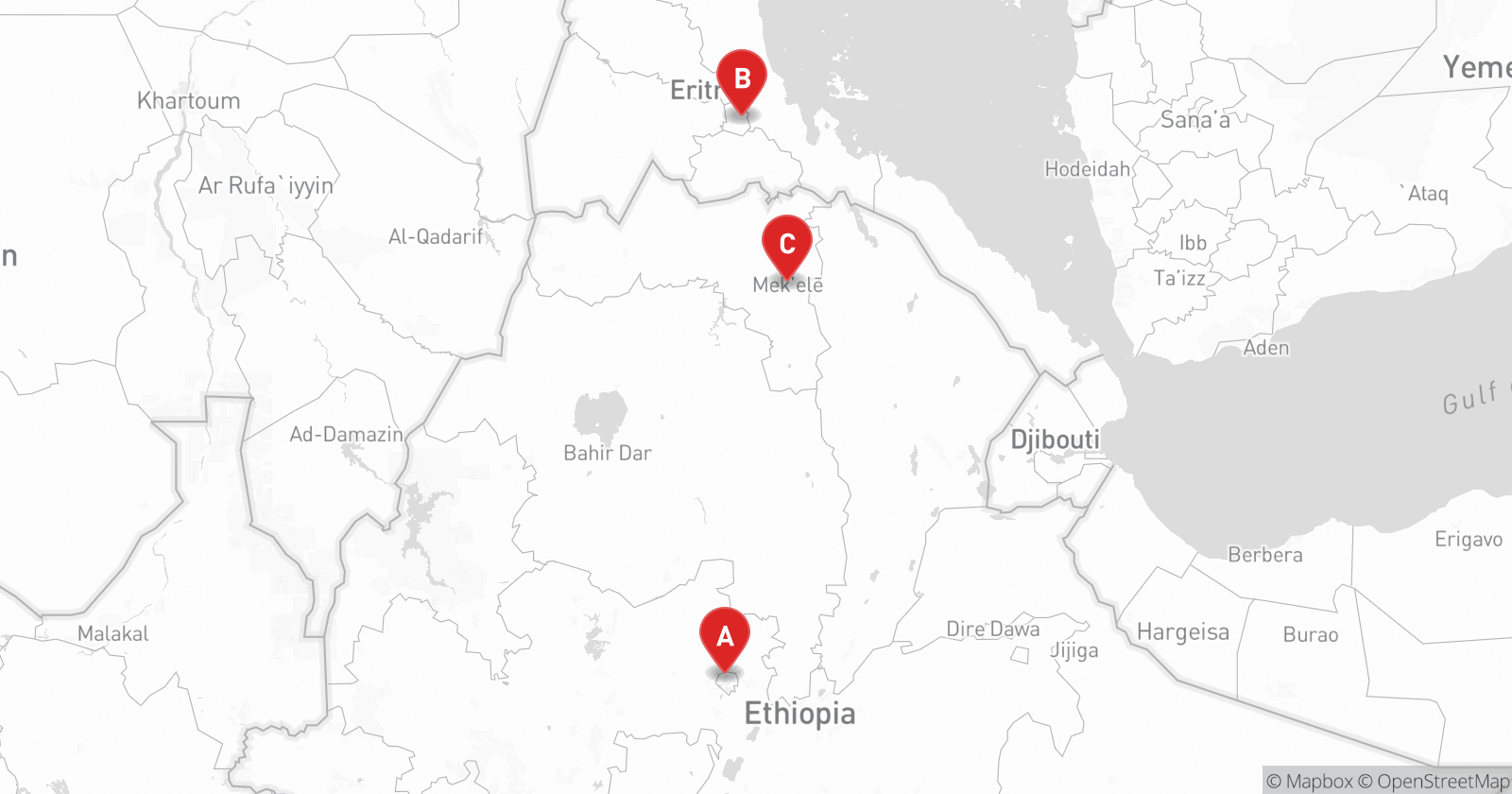
Ethiopia and Eritrea broke diplomatic relations after Ethiopia ordered 10 Eritrean diplomats to leave the country and announced the closure of its embassy in Asmara. Eritrea responded by severing diplomatic ties. The measures represented a formal collapse in relations between two neighboring states whose recent history has been closely linked to conflict in northern Ethiopia.
The diplomatic rupture occurred as fighting intensified in Ethiopia’s Tigray region. Reports described clashes involving Ethiopian federal forces and a Tigrayan-led opposition alliance, with the sides and their regional allies accusing one another of providing military or political support. The renewed violence followed the earlier Tigray war, which ended in a 2022 peace agreement but left relations between the parties fragile.
Several reports also described signs of spreading insecurity beyond the immediate battlefield. Explosions were reported in Addis Ababa, while government-aligned forces were said to be moving toward Mekelle, Tigray’s capital. Banks and shops in the city were reported to have closed as residents faced growing uncertainty. These developments were presented as reported events rather than a fully verified account of the military situation.
The fighting has also produced a humanitarian toll. Coverage referred to deaths, injuries and displacement, while aid groups were reported to have treated hundreds of wounded people. At the same time, restricted access, disrupted communications and the competing claims of the parties made it difficult to independently confirm battlefield movements, alleged drone attacks or the identities of those responsible for particular incidents.
How coverage differs
The Associated Press leads with the diplomatic action itself, treating the expulsions, embassy closure and Eritrea’s reciprocal decision as the clearest markers of escalation. Its account also connects the political crisis to the immediate experience of civilians, including reports of explosions in Addis Ababa and disruption in Tigray. That combination gives the story both an institutional focus and a sense of public danger.
Al Jazeera places greater weight on the reciprocal nature of the rupture and on the longer deterioration in Ethiopia-Eritrea relations since the Tigray war. Its framing gives more space to allegations that Eritrea, Sudan and Egypt may be involved in the conflict’s wider regional dynamics. The report presents those accusations as disputed, but their inclusion shifts attention from a bilateral diplomatic dispute toward a contest involving several governments.
Africanews makes the humanitarian consequences the organizing feature of its coverage. Rather than concentrating primarily on the diplomatic sequence, it emphasizes casualties, displacement and medical treatment, while stressing how restricted access limits independent verification. This approach foregrounds the cost of renewed fighting and is less centered on the strategic calculations of national governments.
The Reuters report published by Italy’s Internazionale focuses most closely on the military picture around Mekelle and the possibility that the crisis could expand beyond Tigray. Reports of advancing pro-government forces and commercial closures in the city receive particular prominence. Like Africanews, it underscores the uncertainty surrounding several military claims; unlike it, the dominant question is whether the fighting could draw Eritrea, Sudan and Egypt into a larger confrontation. Taken together, the outlets share a factual baseline but assign different importance to diplomacy, regional involvement, civilian hardship and battlefield risk.
Sources referenced
Original reporting synthesized in this article. Civitano summarizes coverage differences — it does not reproduce outlet wording.
- Ethiopia and Eritrea sever diplomatic ties as Tigray fighting intensifies
- 🇫🇷France
Africanews foregrounds the humanitarian dimension, reporting deaths, injuries and displacement since fighting resumed. It also notes that aid organizations have treated hundreds of wounded people, while access and communications restrictions make frontline claims difficult to independently verify.
Published October 2, 2026
- Ethiopian forces near Tigray capital, fears grow of wider conflict
- 🇮🇹Italy
The Reuters report carried by Internazionale concentrates on the reported advance of pro-government forces toward Mekelle and the closure of banks and shops in the city. It presents the diplomatic break as part of a potentially wider regional crisis involving Eritrea, Sudan and Egypt, while flagging that several military claims could not be independently confirmed.
Published October 2, 2026
- Eritrea severs diplomatic ties with Ethiopia in tit-for-tat move
- 🇶🇦Qatar
Al Jazeera highlights the reciprocal diplomatic accusations and places the rupture within the broader deterioration of relations since the 2020–2022 Tigray war. Its report also stresses alleged involvement by Eritrea, Sudan and Egypt, while noting that those accusations are contested.
Published October 1, 2026
- Ethiopia expels 10 Eritrean diplomats as tensions between neighbors escalate
- 🇺🇸United States
AP emphasizes the formal diplomatic escalation, including Ethiopia's expulsion order, the embassy closure and Eritrea's reciprocal decision to cut ties. It also focuses on reported explosions in Addis Ababa and the disruption and fear experienced by civilians in Tigray.
Published October 1, 2026